There are three key ways to reduce the amount of things we have. Reduce, repair and reuse – and if you can’t do any of those then recycle.
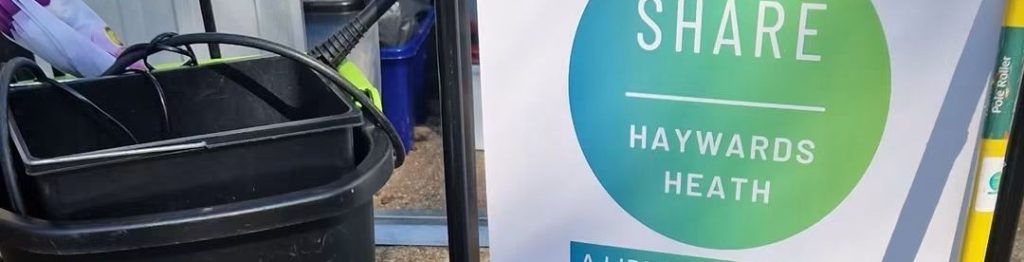
Before buying new equipment for yourself or your group – especially if it’s something that you will only occasionally use – explore whether it’s possible to borrow or share. Once again, what’s good for the environment is also good for your budget as sharing resources saves money, reduces waste and the environmental impacts of production and delivery. Look at local WhatsApp or Facebook groups where you live or check our your local Library of things. There is a local Library of Things – Share Haywards Heath with all sorts of useful things to borrow very cheaply from strimmers to gazebos to use at your local village show.
If there isn’t a Library of Things local to you perhaps take it a step further and start one in your building or community? This initiative encourages people to share resources, appliances, and other equipment, making it easier for everyone to access what they need while also promoting sustainability.
If something of yours has broken and you don’t have the skills to repair it, then try searching out the network of fantastic repair cafes across the country. You’ll find one close to you open pretty much every weekend, and they are great place to meet your community and find out about other community services and initiatives.
Not for profit groups can benefit from free products that are no longer needed by local businesses. If you need some office furniture, then maybe put a call out to your local Business Parks Association. You might also be able to get a free computer or other type of tech from Computers for Charity. And if you need to update your own equipment you can send your old laptops to them as well. There are other charities and charity shops who can offer cheaper second hand options, St Peter and St James Hospice have bigger shops with more furniture.
Buying food and cleaning materials from refill shops can reduce the amount of packing you use as well as supporting local business. Sussex Green Living keep an updated list of Refill shops on their website.
When you need to update a product please do recycle appropriately, also think creatively – might a local school or youth club might be able to make use of something for an art project perhaps? Your local council is recycling more and more, however some things need to be taken to specific places. Soft plastics including crisp packets, sweet wrappers, bread bags can all be recycled at your local supermarket – often local community groups may offer options for hard to recycle products such as stationary items or glasses.
If you need something for a project you may want to make it yourself from recycled products or talk to your local Shed about whether it’s a project they can help with. A great example of this is Sussex Green Living’s network of Pollination Education Stations across Sussex – all made with recycled wood by local community groups.